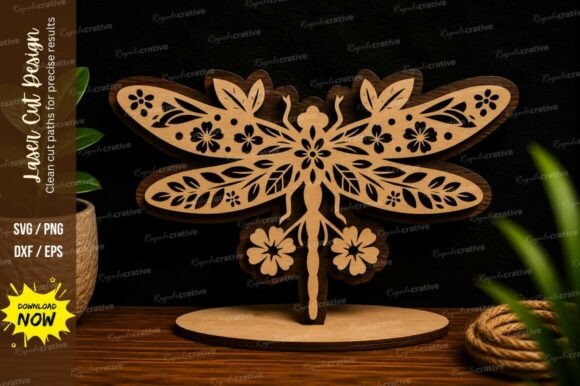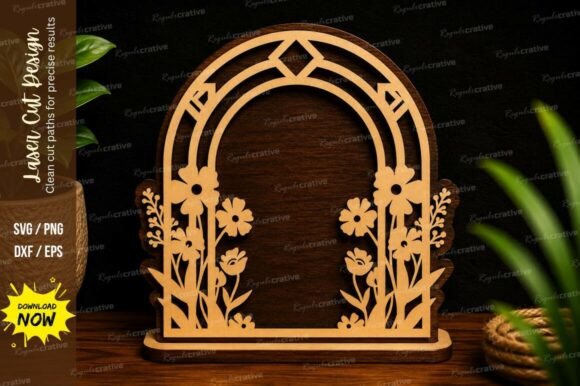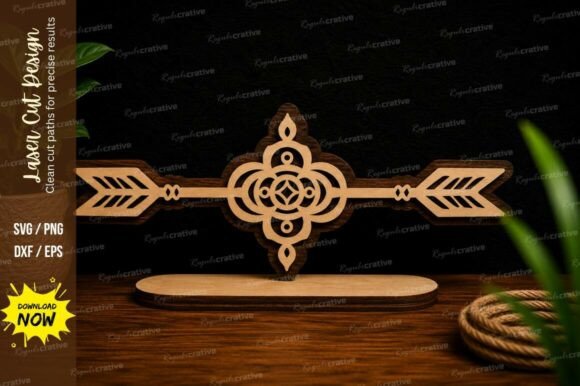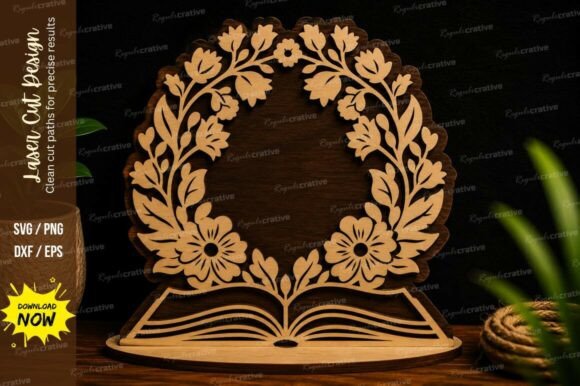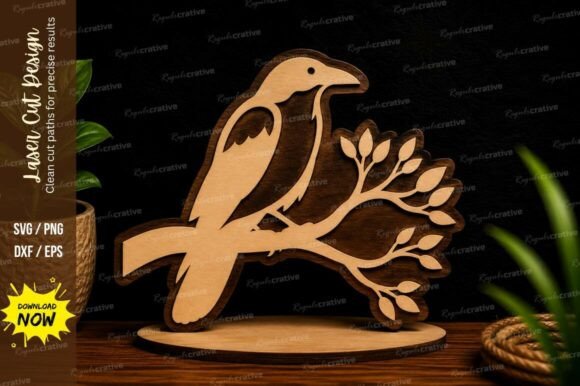
Decorative Bird on Branch Stand Laser Cut Design Evaluation
For makers, hobbyists, and small business owners utilizing digital fabrication tools, the selection of a design file is often as critical as the choice of material. The Decorative Bird on Branch Stand Laser Cu represents a specific category of vector art intended for physical production. This design package provides the digital blueprint necessary to create a three-dimensional or layered standing figure of a bird perched on a branch. Unlike flat decals or simple 2D prints, this design is engineered with structural considerations in mind, allowing users to assemble a stable stand using laser cutting technology.
The core value of this product lies in its preparation for precision manufacturing. It is not merely an image but a technical file set that includes multiple formats such as SVG, EPS, PNG, DXF, and PDF. This multi-format approach ensures compatibility with a wide spectrum of software environments, from Adobe Illustrator and CorelDRAW to dedicated machine control software like LightBurn or RDWorks. Understanding the utility and limitations of this specific design file is essential for anyone considering it for their next project.
Understanding the Design Structure and Utility
The Decorative Bird on Branch Stand Laser Cu is designed to translate digital vectors into tangible objects. The "Stand" aspect implies that the file likely contains interlocking tabs, slots, or layered components that allow the final product to remain upright without external adhesives. This structural integrity is a primary reason why crafters seek out this specific design over generic bird silhouettes.
When evaluating this file set, it is important to recognize that the quality of the output is directly dependent on the quality of the input vectors. The package advertises high-quality and clean vector designs, which means the paths are closed, nodes are optimized, and lines do not overlap unnecessarily. These characteristics are vital for smooth and precise cutting. In laser cutting, messy vectors can lead to double-cutting, excessive burning, or failed cuts where the machine loses focus on the path. A well-prepared file reduces the need for manual cleanup in vector editing software, saving time and reducing the risk of human error during the setup phase.
Key Benefits for DIY and Commercial Projects
There are several compelling reasons to select this design file for wood, acrylic, metal, or paper projects. The most significant advantage is versatility. Because the package includes industry-standard formats like SVG and DXF, it bridges the gap between different hardware ecosystems. Whether a user operates a CO2 laser cutter for organic materials or a fiber laser for metals, the appropriate file format ensures the machine interprets the geometry correctly.
Scalability without Quality Loss
One of the inherent strengths of vector-based designs is their ability to be resized infinitely without pixelation. This feature allows a maker to produce a miniature bird for a jewelry box or scale the same design up to create a large decorative piece for a lobby. The Decorative Bird on Branch Stand Laser Cu maintains its geometric integrity regardless of size, making it a cost-effective asset for creating product lines of varying dimensions.
Material Adaptability
The design is compatible with a diverse range of materials. For woodworkers, the intricate details of the branch and feathers can be cut cleanly into plywood or hardwood veneers. Acrylic users can achieve a polished look with edge-polishing capabilities, while paper crafters can use the design for complex pop-up cards or shadow boxes. The inclusion of PNG files also offers a preview option for those who wish to visualize the final result before committing to a physical cut, aiding in decision-making regarding color and finish.
Tradeoffs and Technical Considerations
While the design offers significant advantages, potential buyers must consider certain tradeoffs. The complexity of a "stand" design often requires more post-processing than a simple flat cut. Depending on the specific engineering of the joints, assembly may require careful alignment and potentially light sanding to ensure tight fits. If the tolerances in the file are too tight for a specific machine's kerf (the width of the material removed by the laser), the parts may not fit together smoothly.
Machine Calibration Requirements
Users should note that "ready for laser cutting" does not mean "ready for any setting." Different materials and thicknesses require distinct power and speed settings. A file that works perfectly on 3mm birch plywood may burn through 1mm acrylic if the parameters are not adjusted. The responsibility lies with the operator to test the settings on scrap material before running the full batch. The file provides the shape, but the machine settings determine the finish.
Software Compatibility Nuances
Although the package includes multiple formats, not all software handles them equally. Some older CNC controllers may struggle with complex SVG nesting or specific font embeddings within EPS files. Users with legacy equipment might find they need to convert the file to a simpler DXF format to ensure reliable operation. It is advisable to verify that your specific machine's control software supports the preferred format included in the download.
Situational Fit: When to Choose This Design
This design is an excellent fit for individuals seeking to create finished, standalone decorative items rather than flat appliqués. It is particularly suitable for:
- Small Business Owners: Those looking to add a consistent, scalable product to their inventory of home decor or gifts.
- Advanced Hobbyists: Makers comfortable with assembling multi-part structures and adjusting machine parameters for different materials.
- Event Decorators: Professionals needing custom signage or table centerpieces that require a professional, non-pixelated appearance at various scales.
If the goal is to produce a quick, single-layer decal for a window or a simple t-shirt transfer, this file may be over-engineered. However, for projects requiring depth, stability, and a polished aesthetic, the Decorative Bird on Branch Stand Laser Cu aligns well with those objectives.
Alternatives and Decision-Making Insights
In some scenarios, alternatives may be worth considering. If a user lacks a laser cutter entirely, this file set will not be immediately useful unless they have access to a vinyl cutter or plotter, though the "stand" functionality would be lost. Similarly, if the project requires extreme customization—such as changing the species of the bird or altering the branch structure significantly—users with limited vector editing skills might find a pre-made file restrictive. In such cases, commissioning a custom design or learning to model from scratch in CAD software might offer greater flexibility.
Another consideration is the learning curve. Beginners to laser cutting might find the assembly of a standing structure daunting compared to simple flat cuts. For these users, starting with simpler, single-piece designs might build confidence before tackling a multi-component project like this one. However, for those ready to advance their crafting capabilities, the instant download nature of this package removes the barrier of sourcing and waiting for shipping, allowing for immediate prototyping.
Ultimately, the decision to utilize the Decorative Bird on Branch Stand Laser Cu depends on the balance between desired outcome and available resources. It offers a robust solution for those equipped with laser technology and a desire for high-quality, dimensional results. By understanding the file formats, material constraints, and assembly requirements, users can effectively integrate this design into their workflow, ensuring a successful transition from digital concept to physical reality.